Scenic winter circular hike along the Roman Trail from Kiens/Chienes to Ehrenburg/Casteldarne, with fascinating Roman history, historic sights and beautiful views.
The winter hike along the Roman Trail from Kiens/Chienes to Ehrenburg/Casteldarne combines nature, culture and history in a particularly varied way. This pleasant circular walk leads through the winter landscape of the Pustertal/Val Pusteria and offers fascinating insights into the region’s Roman past. Along the route, several information and rest stations tell the story of life and travel in Roman times, while beautiful views of the surrounding mountains open up along the way.
The starting point is the village centre of Kiens/Chienes. From here, the signposted Roman Trail leads through the peaceful countryside towards Ehrenburg/Casteldarne. The route follows pleasant woodland and walking paths through the valley floor of the Pustertal/Val Pusteria. The hike is particularly attractive on sunny winter days, when the surrounding mountains are covered in snow and the crisp winter air creates a special atmosphere.
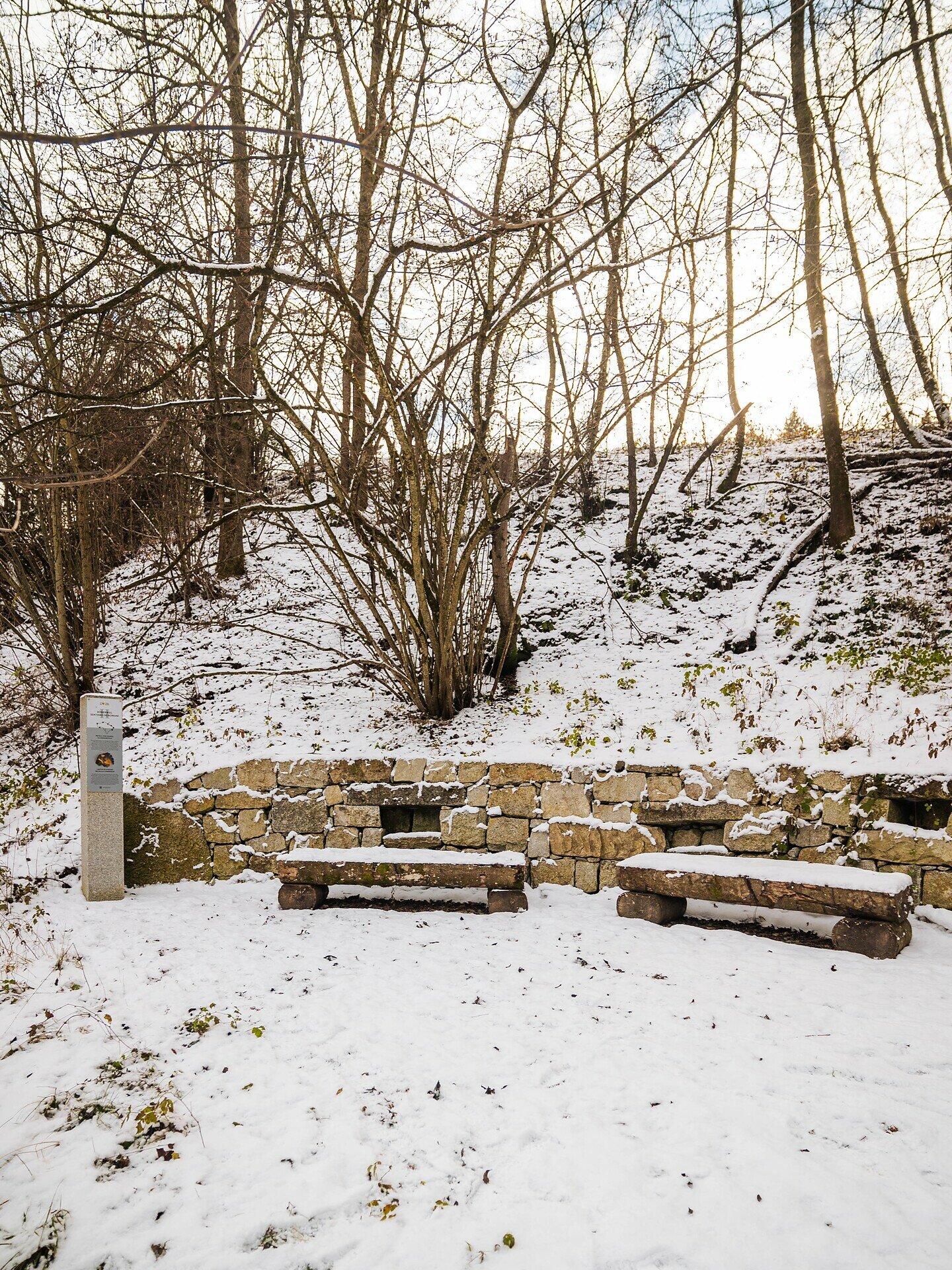
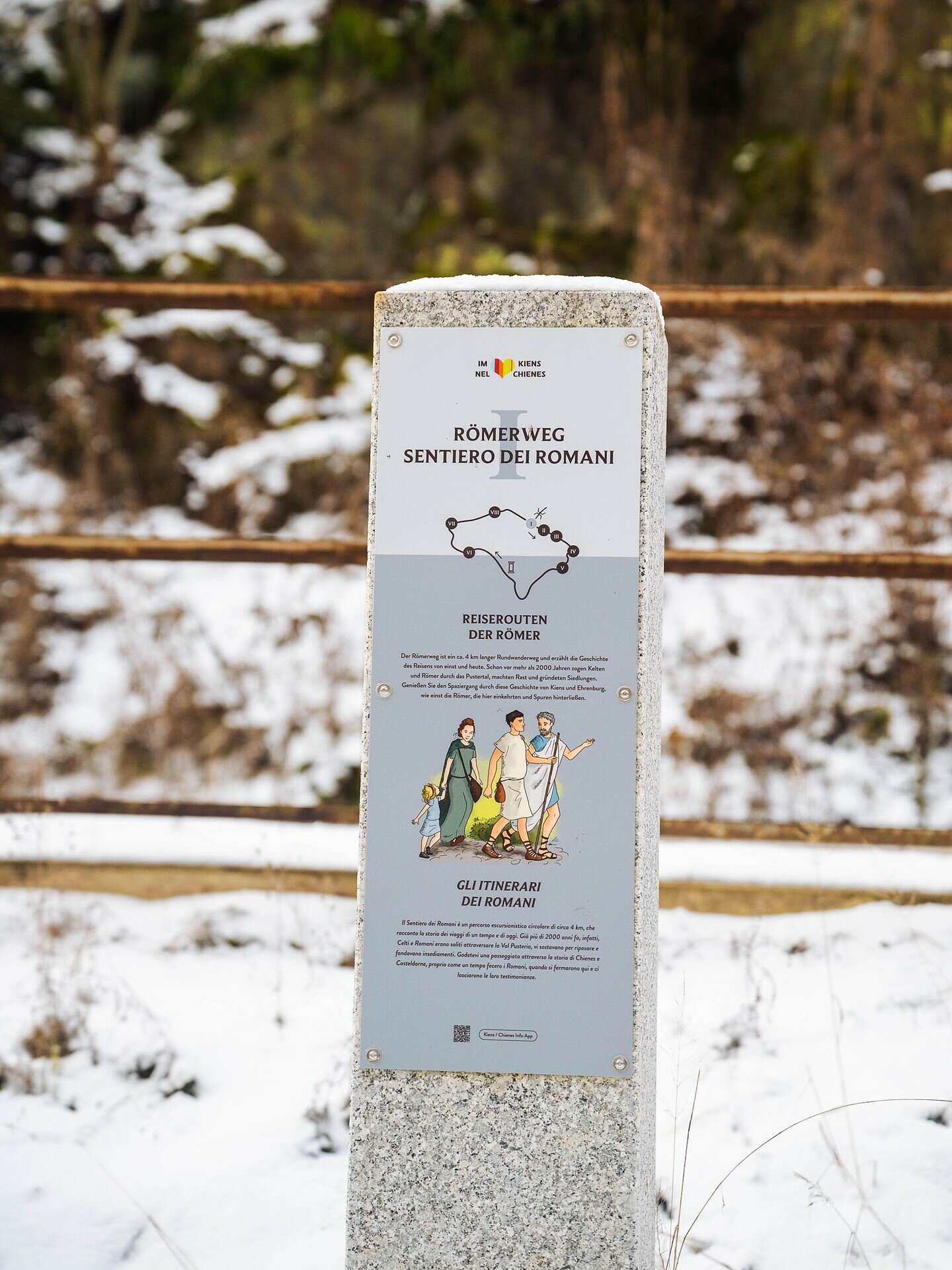
More than 2,000 years ago, the Pustertal/Val Pusteria belonged to the Roman province of Noricum and formed part of an important transport network. The roads of that time were used not only for trade but also for communication and exchange between different regions. Along the Roman Trail, several interactive information and rest stations provide interesting insights into travel in Roman times, the importance of trade routes and the role of ancient stopping places. Even in winter, it is worth taking time to explore these stations and learn more about the history of the Pustertal/Val Pusteria.
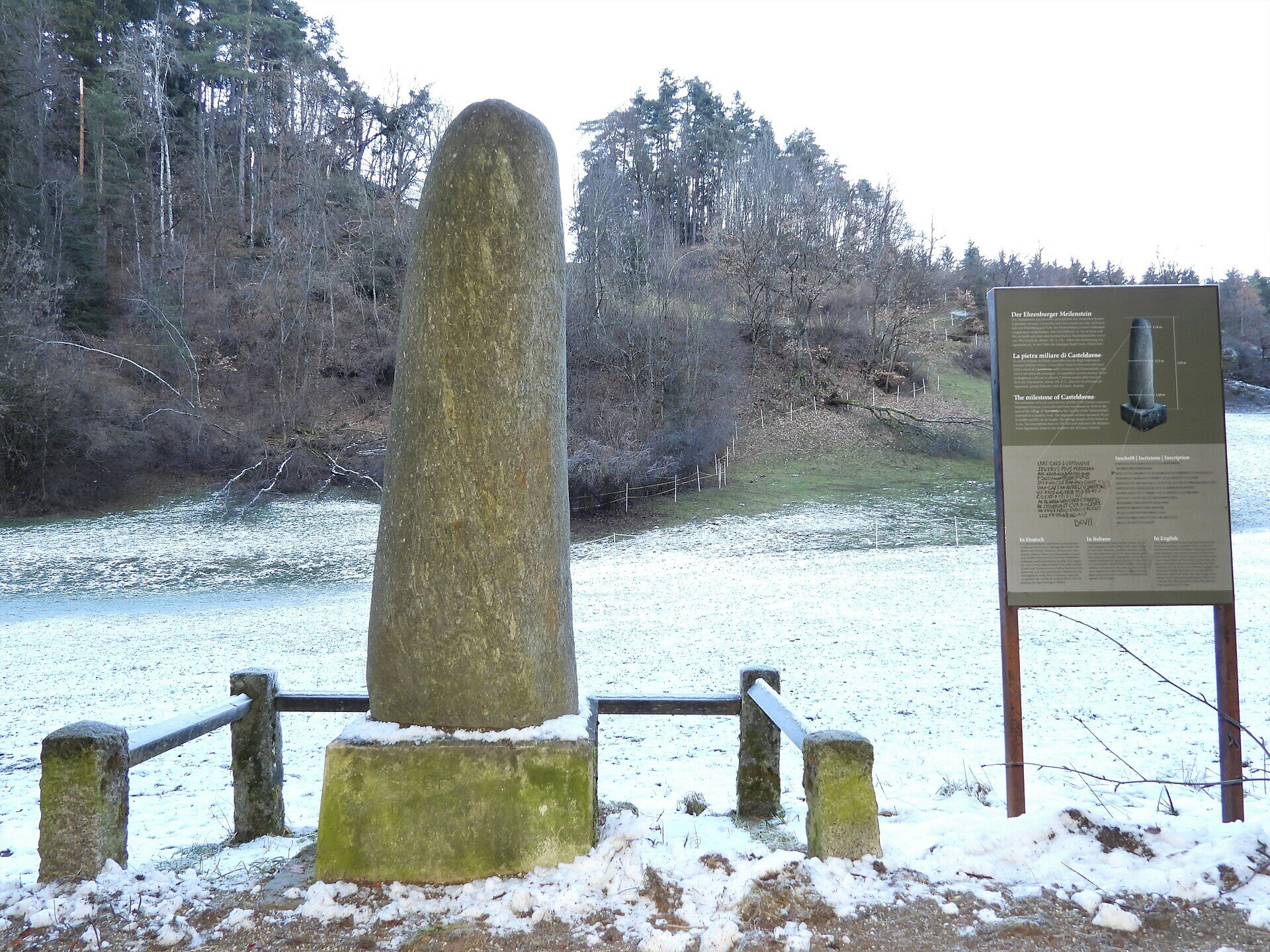
One of the highlights of the hike is the historic Roman milestone in Ehrenburg/Casteldarne. Standing around two metres tall and made of quartz phyllite, it is one of the best-preserved Roman milestones in South Tyrol. It was erected during the reign of Emperor Lucius Septimius Severus and indicates the distance to the former Roman town of Aguntum near Lienz, in present-day East Tyrol. This impressive stone is a lasting reminder of the importance of the Pustertal/Val Pusteria as a transport route in ancient times.
The village of Ehrenburg/Casteldarne itself also has plenty to discover. Particularly worth seeing is the historic Ehrenburg/Casteldarne Castle, built around 1250, which still shapes the village’s appearance today. Another cultural highlight is the Baroque parish church of the Assumption of Mary. Traditional wooden fences, old dry-stone walls and historic buildings give the village a special charm that can also be enjoyed in winter.
After visiting Ehrenburg/Casteldarne, the hike follows the Roman Trail back to Kiens/Chienes. Along the way, there are further opportunities to enjoy the winter scenery and reflect on the historical sights encountered during the walk.
The route mainly follows easy woodland and walking paths along the valley floor, with only gentle changes in elevation. This makes it particularly suitable for families, history enthusiasts and anyone looking to combine a relaxing winter walk with cultural discoveries. There are also places to stop for refreshments in the village centres of Kiens/Chienes and Ehrenburg/Casteldarne.
Important: The Roman Trail’s accessibility depends on current snow and weather conditions. Some sections may be covered in snow or ice and may not be cleared. Sturdy winter hiking boots with good grip and, if necessary, microspikes are therefore recommended.